+1 Tongue Escape Guides — Every System, Dated and Source-Tagged
All +1 Tongue Escape guides: World 2 and its event timeline, the stage ladder, Rebirth resets, Wins income, training multipliers, the full Robux catalog, and the beginner path — every number dated.
Every guide on Tongue Escape Guide lives here. The site covers one game — +1 Tongue Escape by dot x ast — and one rule: every number carries its capture date and source level, so you can tell verified facts from community reports at a glance. Start with the path that matches your question.
The guides
- Beginner guide — the first-hour order: codes, starter treadmill, the Stage 1→3 Wins loop, the cheap tongue chain, first rebirth.
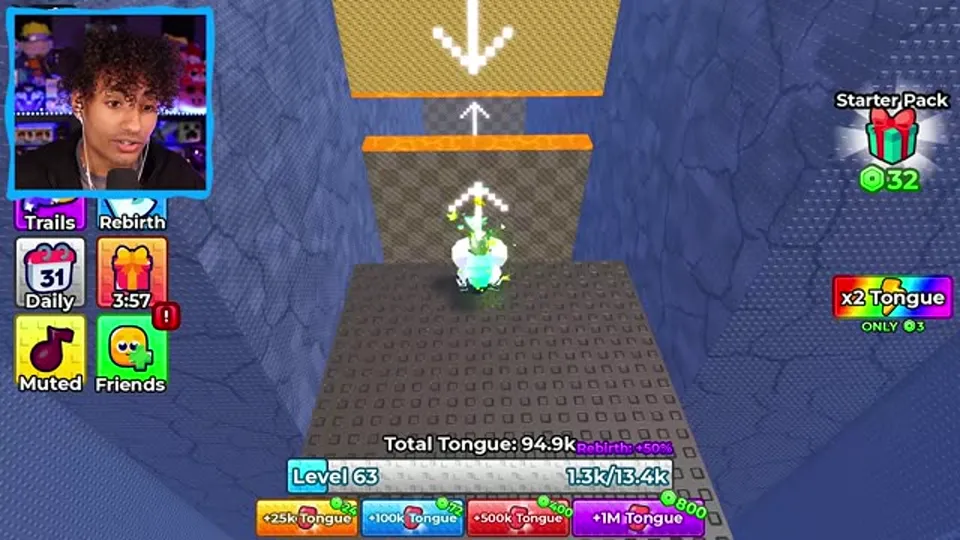
- How to play — the movement loop (extend, latch, slide) and every HUD surface explained.
- World 2 — the Sky Kingdom era: the October 7 announcement, the title change, Pirate Zones, Auction House, and the October 28 hidden event window.
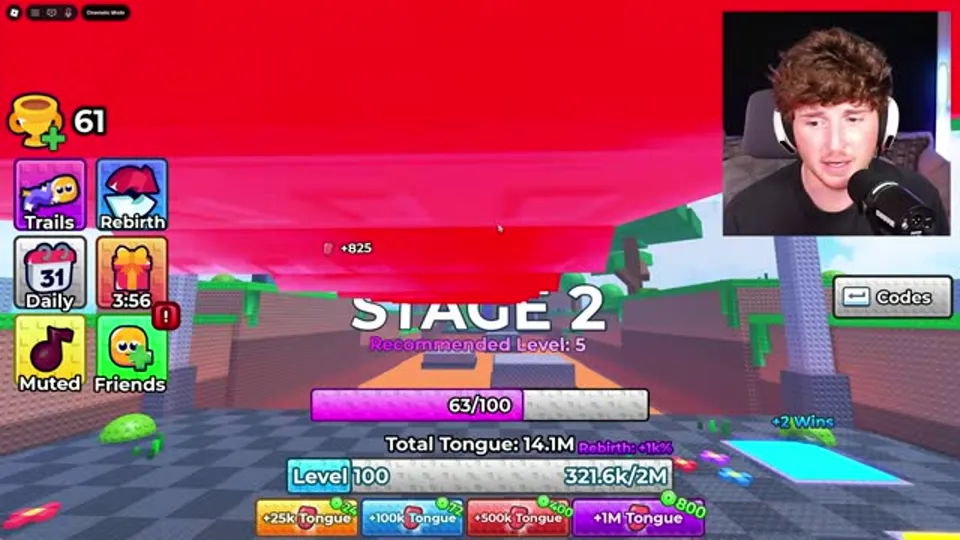
- Stages — all twelve stages with recommended Levels 0–100, the verified Wins pads, and the two-failure-type obstacle playbook.
- Rebirth — the Level-gated reset: what wipes, what survives, the multiplier ladder, when to pull it.
- Wins — the four free sources, the Daily card schedule, and the paid pads to decline.
- Training — the treadmill loop, the four multipliers, the paid trainer pads.
- Game passes — the full catalog: 15 passes + 12 developer products with IDs and dated prices.
Tools, not just text
Two interactive planners do math on your own inputs instead of serving average guesses:
- Tongue Upgrade Planner — chain costs, what you can afford right now, and the best-value step for your Wins balance.
- Wins Rate Planner — your measured payout and lap time in, time-to-target out.
Reference pages
- Types of tongues — all 15 tongues with dated costs and bonuses, the Robux specials, and value-per-Win analysis.
- Codes — the working pool with per-code verification levels, plus the expired archive.
- Update log — every dated change and event since launch.
- Player count — live CCU, visits and the history curve.
The site re-verifies its numbers against the live game on every update — dates on tables are check dates, not decoration.
How to use this site
Three paths cover most visits. "Give me the free stuff": the codes page first (thirty seconds, 15,000 Tongue), then the beginner guide for the order to spend it in. "What do I do next?": the stages guide tells you when to train versus push, and the two planners — Tongue Upgrade Planner and Wins Rate Planner — do the shopping math on your own numbers. "What changed this week?": the World 2 guide and update log carry every dated event since launch, re-checked daily against the game's own announcements.
How we verify
Every claim on this site carries one of five source levels, shown as a colored tag at the foot of each section: Roblox API (official endpoints), Developer (official statements), Footage (read frame by frame from captured gameplay), Community (multi-source player reports), and Inferred (our own reasoning, labeled as such). Numbers that no source supports yet are written as "to be verified" rather than guessed — including, right now, World 2's full stage count and most pass descriptions, which the developer leaves empty in the catalog. When a tracker and an on-screen capture disagree (as two did over the BONUS500 reward amount), the capture wins and the disagreement is documented rather than averaged.
FAQ
About these guides
Which guide should I read first?
The beginner guide if you are new — it sequences codes, training, the Stage 1→3 Wins loop and the first rebirth into one path. If you already know the loop, the codes page and the two planners are the highest-value stops.
Are the guides up to date for World 2?
Yes for systems — the tongue chain, stage ladder, Rebirth and Wins mechanics all match captures made after the World 2 rollout. The World 2-specific content (Sky Tongue, the event schedule) is dated per row, and the page flags exactly which World 2 details are still unverified.
Why do some numbers have confidence labels and others do not?
Labels appear where sources disagree or where only one observation exists. The Stage 3 +3 Wins pad, for example, is labeled verified because two independent captures recorded it; most other pads carry no payout claim at all because none has been measured. Absence of a number usually means absence of evidence, not absence of a feature.
All guide

Related pages